Your business already knows the answer to almost every question a customer or employee will ever ask. The problem is where the answer lives: a 40-page SOP nobody reads, a pricing PDF buried three folders deep, two policy docs that quietly contradict each other, and a founder's inbox. When someone asks "what's your refund window?" a human has to stop and dig. Digging is slow, it's inconsistent, and it does not scale. RAG fixes exactly this.
The real problem isn't your AI, it's your filing cabinet
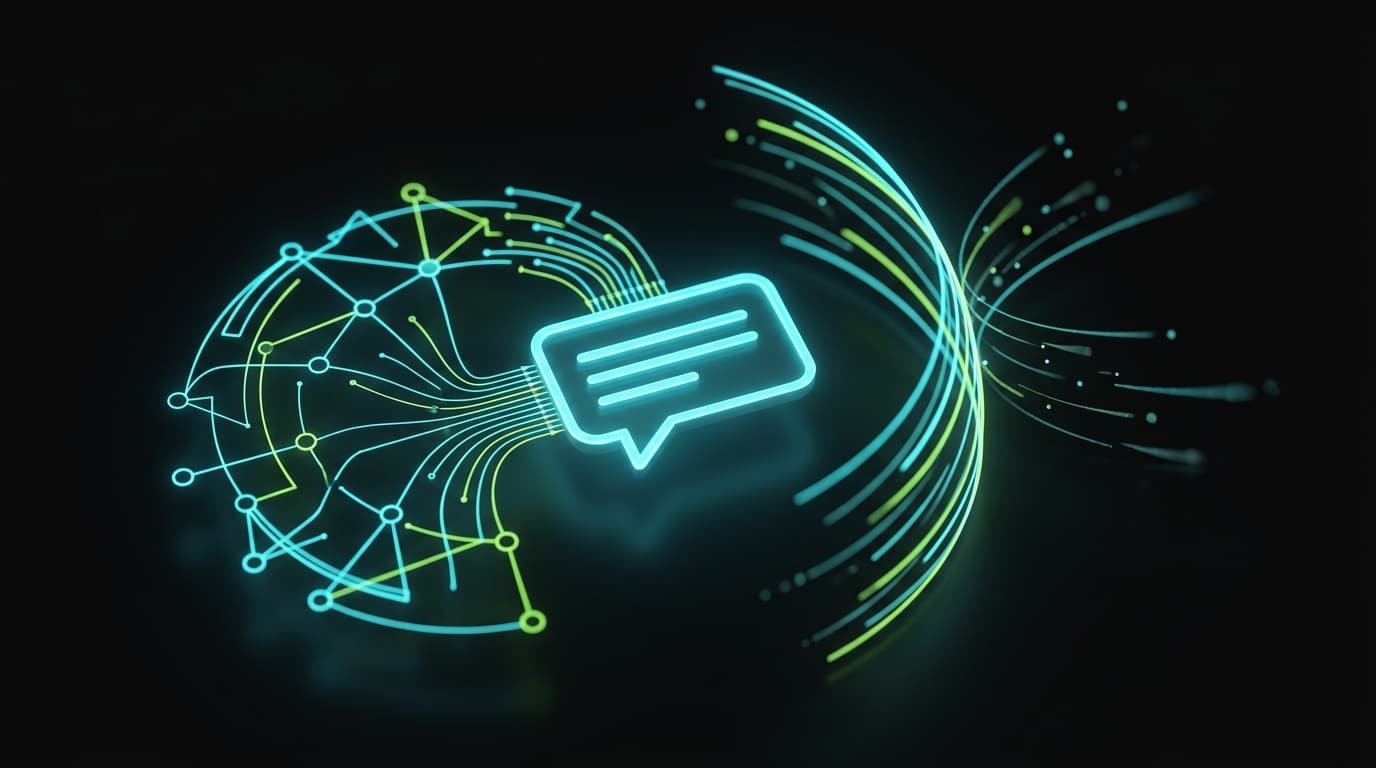
Most of the "AI doesn't work for us" frustration we hear isn't actually an AI problem. It's a retrieval problem. A generic chatbot, or a raw ChatGPT window, will happily answer a question about your business and get it completely wrong, because it has never seen a single one of your documents. It's improvising. The fix isn't a smarter model. It's connecting a capable model to your specific, messy, real-world information. That bridge between a smart language model and your documents is what RAG is for.
“The danger isn't an AI that says "I don't know." It's a poorly-built one that says the wrong thing, confidently.”
How an AI knowledge base for business actually works
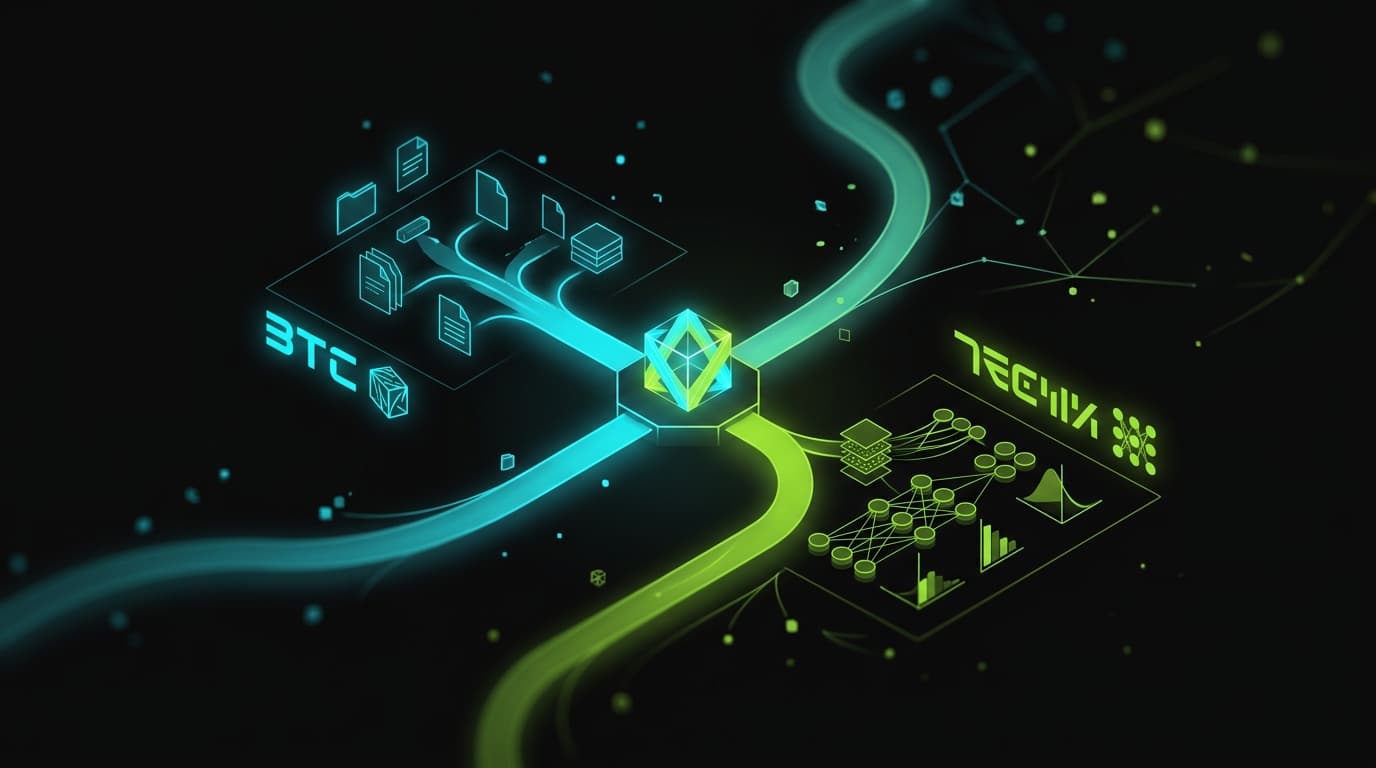
Here's the simplest version. If a colleague asks you a fact you don't have memorized, you look it up first, then answer. An AI knowledge base for business built on RAG makes the AI do the exact same thing: retrieve first, generate second. That's the whole idea. And to bust the most common misconception right away: RAG does not mean "a fancy database." The database is plumbing. The point is getting the right information in front of the AI before it opens its mouth.
That phrase "organized by meaning" is doing quiet but important work. It's why a question about a "kitten" can land near content about cats and pets even if the exact word never appears in your docs. Customers get to ask things their way instead of guessing your internal vocabulary. The mechanics underneath, how that meaning-search is actually stored and queried, are a real engineering choice with real trade-offs. We break down the options in our vector database comparison for 2026, but you don't need any of that to decide whether this is worth doing for your business.
What a good answer feels like vs. a bad one
Bad retrieval (confidently wrong)
- A customer asks about "rule 27" and the system pulls "rule 26" because the two are textually similar.
- The AI answers with total confidence anyway, because nobody told it to check how strong the match was.
- Nobody catches it until a customer acts on the wrong information.
- Every wrong answer quietly erodes trust in the whole system.
Good retrieval (grounded and honest)
- A customer asks for a specific service and its price, and gets the exact entry from your own services doc, instantly.
- No human in the loop for routine questions, no system to babysit.
- When the match is weak, the assistant says so or routes to a person instead of bluffing.
- The answer is in your voice, on your policy, around the clock.
This is the part owners actually care about, and it's all about customer experience, not engineering. The failure mode to fear isn't an AI that admits uncertainty. It's one that grabs a nearby-but-wrong document and delivers a confident, wrong answer. That single difference, between a reliable assistant and a liability, is almost entirely about how it's built.
The honesty layer: a knowledge base is only as good as your docs
There are three realities every owner should hear before spending a rupee or a dollar on this:
- Outdated docs mean outdated answers. If your price list is from last year, the AI quotes last year. A real system needs a way to refresh and remove stale documents continuously, not a one-time upload that rots.
- Gaps stay gaps. RAG cannot invent a policy you never wrote down. If a chunk of your customer questions aren't covered in any document, the AI can't cover them either, and a well-built one should say so rather than fabricate.
- Confident-but-wrong is the real risk. The work that separates a trustworthy assistant from a liability is the guardrail layer: making the system measure how confident its match is and refuse to answer, or escalate to a human, when the match is weak.
This is where we'd rather lose a sale than ship something that embarrasses you. If your docs aren't ready, we tell you up front. Honesty about where AI is the wrong answer is the whole brand.
What's actually possible once your docs become an AI knowledge base
Shift from how it works to what you get. Once your information is retrievable, the same core system unlocks a stack of outcomes:
- Customer-facing support that runs 24/7. Product, pricing, policy, and FAQ questions answered from your real docs, deflecting routine tickets so your team handles the genuinely hard ones. We go deep on this exact play in our teardown on deflecting support tickets with a RAG bot.
- An internal staff assistant. New and frontline staff ask "how do we handle X?" and get the SOP answer instantly, instead of interrupting a manager mid-shift.
- Auto-drafted email replies. An incoming email triggers the assistant to pull the relevant context and draft an accurate reply for a human to approve in seconds.
- A searchable archive of everything. "Pull everything we decided about the June launch" across months of meeting notes and transcripts.
- Always-current knowledge. When a document changes in your drive, the knowledge base updates itself, so answers never quietly drift out of date.
A well-built assistant also remembers the conversation. A customer can ask a follow-up like "so I can't do that between visits?" without re-explaining who they are or what they meant, because the system ties the chat to them by their phone or email. This isn't theory for us. It's the same class of system running behind our own franchise: The Belgian Waffle Xpress, a 30-outlet operation that has processed roughly 8,000 leads with sub-30-second WhatsApp alerting. In production, not on a slide.
leads processed through our own franchise's automation, with sub-30-second WhatsApp alerting across 30 outlets
Why most businesses shouldn't build this themselves
The concept is simple. The reliable build is not. A handful of quiet decisions make or break a real deployment, and they're invisible until they fail in front of a customer:
Slicing documents correctly
Decide how to break docs into pieces so a policy split across several chunks doesn't come back half-answered.
Tagging for exact recall
Structure content so the system can pull "rule 27" precisely, instead of something rule-shaped and nearby.
Building the guardrail layer
Set the confidence thresholds that decide when to answer versus when to escalate to a human.
Keeping it fresh
Wire up update-and-delete pipelines so the knowledge base stays current, not a dead one-time dump.
There's also a prior question most owners skip: is RAG even the right tool? Sometimes the better answer is to train a model on your domain instead of looking documents up at runtime, and sometimes it's both. We lay out exactly how to choose in fine-tuning vs. RAG: which one your business actually needs. If you'd rather skip the homework: you hand over your docs, we handle the slicing, the meaning-search, the re-ranking, the guardrails, and the maintenance. You stay in your lane. No jargon handoff, you talk to the people building it, and if it's not a fit, we tell you.
Find out if your docs are ready, before you spend a thing
An AI knowledge base is only worth building if your documents can actually support one. Some businesses are ready today. Others need a cleanup pass first, and we'll tell you which one you are. Hand us a look at your current docs, SOPs, and FAQs, and we'll assess whether they can power a reliable AI knowledge base, where the gaps are, and whether RAG is even the right call. No pitch deck, no contract, no account manager. You hear back from a builder.