70% of ecommerce carts get abandoned. Every serious store owner knows this number. Almost none of them are actually recovering it.
Monthly abandoned-cart revenue on a typical $50K/mo store
The single-email trap
Every Shopify store gets offered cart recovery as a feature. Most turn it on, set up a single email — 'You forgot something!' — and call it done. Then they wonder why recovery is 3%.
Here's the problem: email recovery has terrible unit economics in 2026.
Average abandonment email open rate
Click-through rate on abandonment emails
Of shoppers use ad blockers or promo filters that hide these emails
Realistic recovery rate from email-only flows
Email still works — it's not dead. But it's one channel among many. And the shoppers who abandon carts in 2026 are multi-channel humans. They're on WhatsApp, Instagram, TikTok, and email simultaneously. If you only speak to them in one place, you miss them.
What multi-channel recovery actually looks like
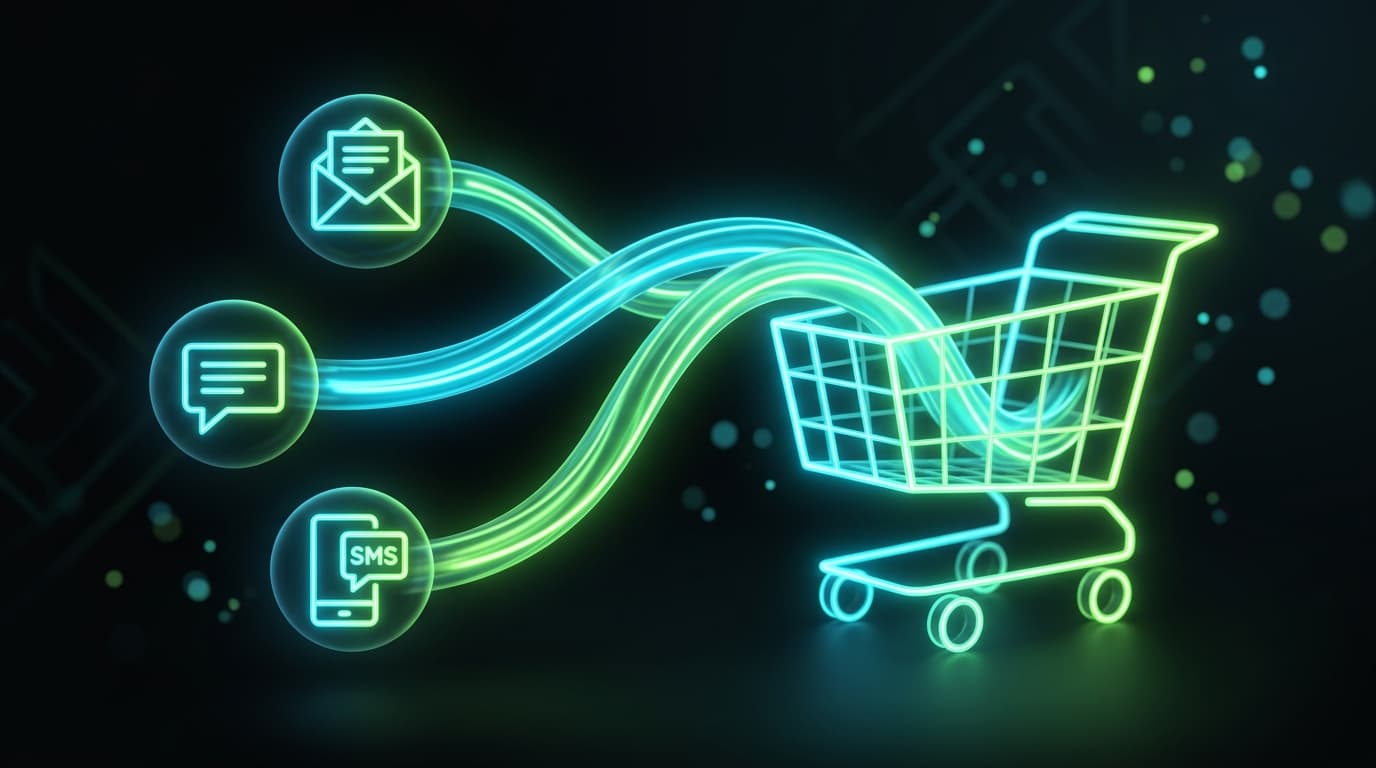
The flow we build for DTC clients looks nothing like a single email. It's a carefully timed sequence across email, WhatsApp, SMS, and retargeting ads — with AI personalization based on what was in the cart.
Run your numbers
Monthly abandoned cart revenue you could recover
The 3 rules that make or break recovery flows
Timing > copy
The single biggest variable is how fast you reach the customer. 15 minutes vs 2 hours is the difference between 'I was in the bathroom' and 'I already ordered from someone else.' WhatsApp wins on timing because it has a 95% open rate within 3 minutes.
Personalization by cart content, not by name
'Hi John, you left something behind' is worthless. 'Hi John, the Classic Tee in size M is about to sell out — here's what other customers said about it' converts 8x better. Your flow needs to pull actual cart data and use it.
Don't discount until step 4
Most stores throw a 10% coupon in the first email. Congratulations, you just trained your customers to abandon carts to get discounts. Discount only shows up in the last 2 messages, and only for carts over a certain value threshold.
D2C fashion brand: 3.2x ROAS on cart recovery alone
The stack
- Klaviyo (or Customer.io) — handles email flows and customer data
- Meta WhatsApp Cloud API — NOT WhatsApp Business App. This is the version that lets you send templated messages programmatically.
- n8n — ties it all together. Receives Shopify abandoned cart webhooks, fires the right channel at the right time.
- Meta Ads API + Google Ads API — dynamic retargeting audience sync
- GPT-4 / Claude — generates personalized subject lines and message copy based on cart contents
Common questions
Stop leaving money in abandoned carts.
We build multi-channel recovery flows for DTC and ecommerce brands. Typical setup: 1-2 weeks. Typical lift: 10-15% more revenue without increasing ad spend.